
(A Non-profit Tax Exempt Organization IRS Code Section 501(c)(3)EIN #54-1280028)
The JAINA Jivdaya (Animal Welfare) Committee is dedicated to advancing animal welfare initiatives aligned with the principle of Ahimsa (non-violence). The committee supports animal shelters, panjarapoles, and rescue organizations that prioritize life preservation and do not practice euthanasia. It currently facilitates and oversees support for animal shelters in the United States and coordinates international collaboration with Jain centers in countries such as Hong Kong, Australia, Singapore, Malaysia, and the United Kingdom. In India, the committee extends support across multiple states including Gujarat, Rajasthan, Madhya Pradesh, Maharashtra, Assam, Delhi, and West Bengal, benefiting over 100 panjarapoles over the past 14 years. The committee is responsible for identifying credible animal welfare partners, channeling donations effectively, and ensuring transparency and impact reporting. Through these efforts, the committee promotes global awareness of Jivdaya and strengthens JAINA’s commitment to compassion in action.
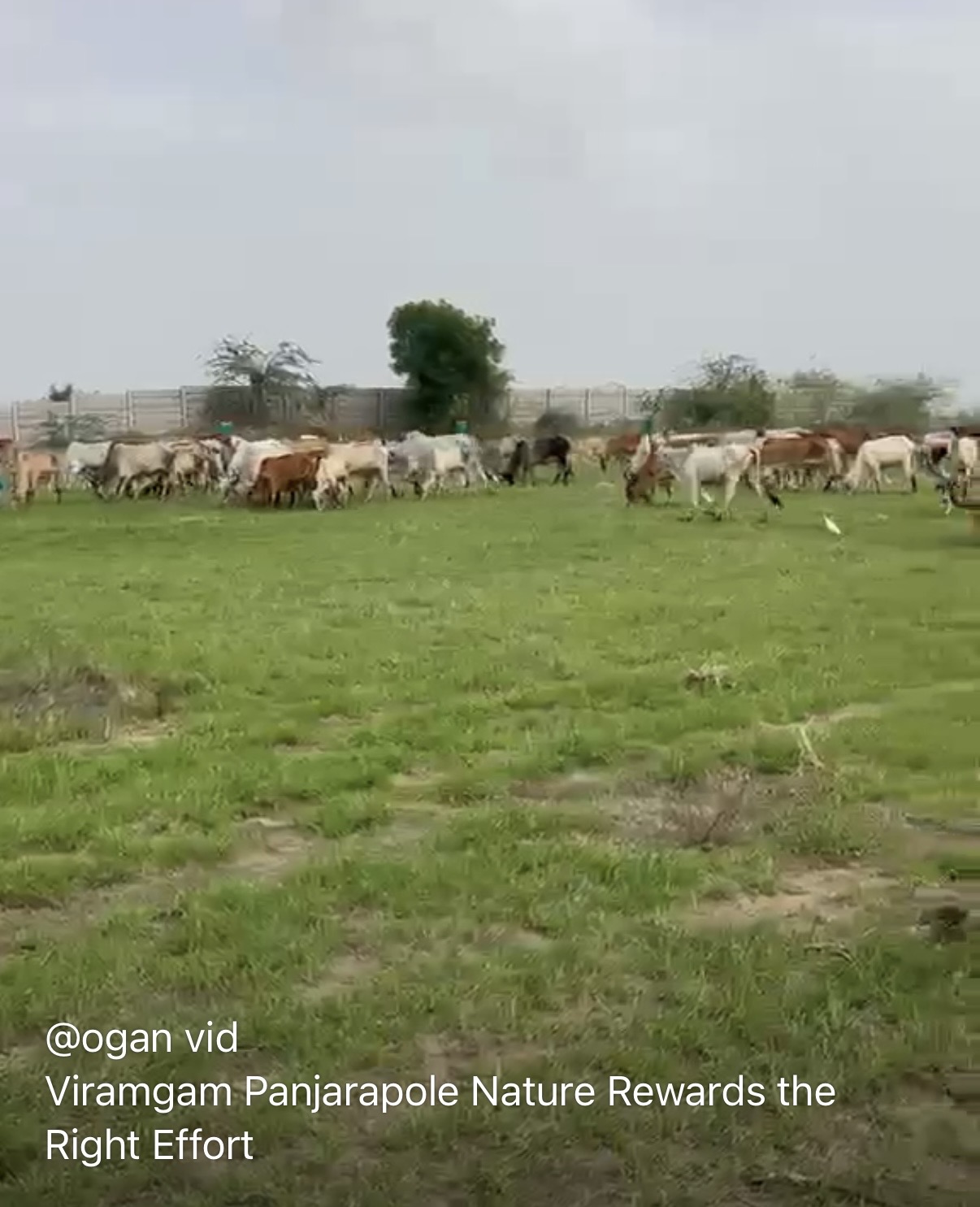 Viramgam Panjarapole Nature Rewards the Right Effort
Last year, Samast Mahajan undertook the restoration of approximately 1,200 acres of grazing land at Ogan and Virpur Vid, under the Viramgam Panjarapole in Gujarat. As part of this initiative, removing prosopis juliflora,2000 indigenous trees ,four large water reservoirs were developed to harvest rainwater and revive the ecosystem.
With the arrival of the very first monsoon, the entire landscape has transformed into a lush green expanse covered with abundant natural grass. Thousands of cattle and other rescued animals are now grazing freely, enjoying a plentiful and nutritious natural food source.
The impact has been remarkable:
* Animals now have adequate natural fodder, resulting in significantly improved health and well-being.
* Mortality has reduced considerably due to better nutrition.
* Increased production of cow dung is being converted into high-quality organic manure, supporting sustainable and natural farming.
* Soil fertility, biodiversity, and the overall ecological balance of the region have improved substantially.
* Dependence on purchased fodder has reduced, making the Panjarapole more self-reliant and environmentally sustainable.
This project is a living example of how scientific restoration of grazing lands can simultaneously protect animals, conserve nature, strengthen rural livelihoods, and promote regenerative agriculture.
Protecting grazing lands is one of the most sustainable and effective ways to protect cattle.
This can also be positioned as a national model for Gaushalas and Panjarapoles, demonstrating how ecological restoration can reduce recurring fodder costs while improving animal welfare and environmental sustainability.
-
Samast Mahajan













Connect with the Jiv Daya Committee. We welcome your expertise, ideas, and partnership to further our initiatives.
6/4/2020SURVEY FOR COVID-19 IN US JAIN POPULATION
6/4/2020CHROME BOOKS PROJECT
5/20/2020SWETAMBAR AGAMS ON JAINA E-LIBRARY
The upcoming calendar is currently empty.

© JAINA.org ALL RIGHTS RESERVED.
 Print Page